
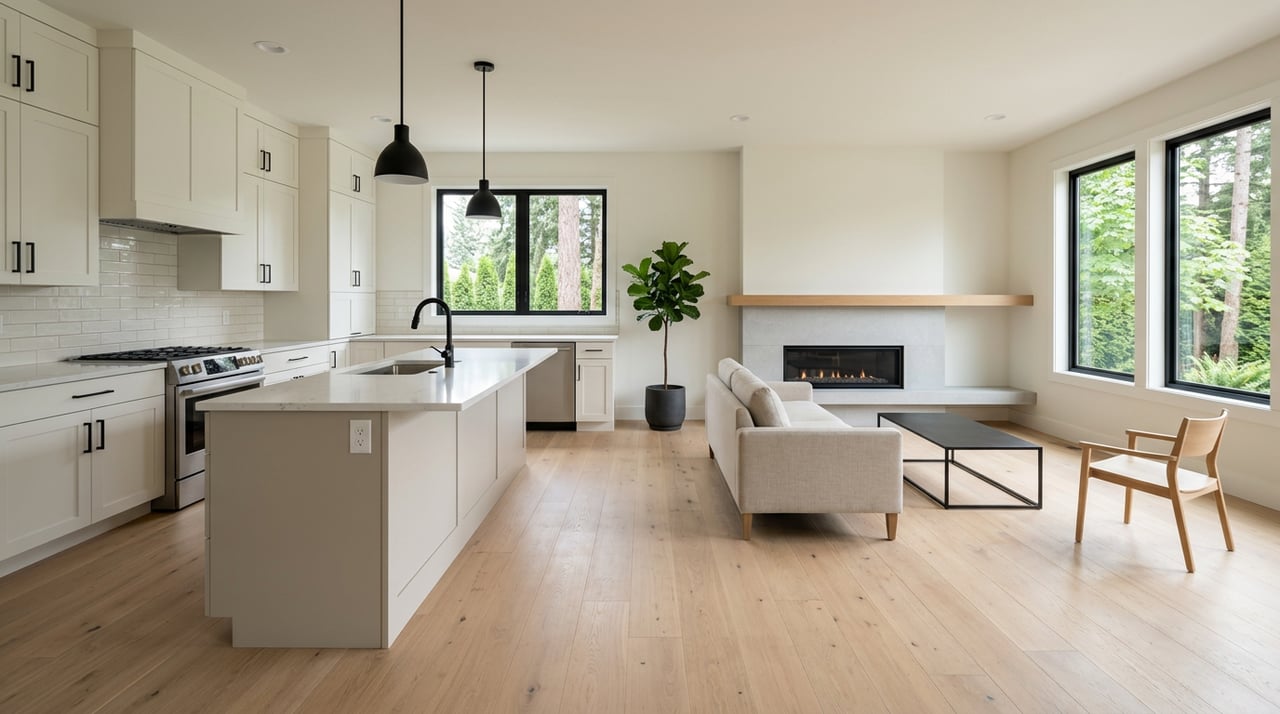
Thinking about a brand-new home in Battle Ground? You are not alone. New neighborhoods are taking shape across the city, with floor plans, price points, and finishes that fit a wide range of needs. In this guide, you will learn who is building here, what typical prices and lot sizes look like, what is usually included, how the process works, and how to protect your interests from the first model-home visit to closing. Let’s dive in.
Why consider new construction in Battle Ground
Local builders and active communities
You will see a mix of regional and national builders working in and around Battle Ground. Current standouts include New Tradition Homes, LGI Homes, Generation Homes Northwest, Taylor Morrison, Richmond American, and D.R. Horton. You can browse an overview of active Battle Ground communities on the regional new-home portal for the area to get a feel for current options and availability. Check the Battle Ground section on New Home Source for representative communities and snapshots.
Examples you may encounter as you explore:
- Walker Field by New Tradition Homes and Generation Homes Northwest, offering single-family plans with a range of sizes and finishes. See a representative plan detail on New Home Source.
- Beverly by LGI Homes, a community with entry-level products that often appeal to first-time buyers. Review the LGI Homes Beverly community page for a sense of typical offerings.
- Additional projects like Woodin Creek Station by Taylor Morrison and Seasons at Maple Grove by Richmond American also surface in local searches and listings.
Price ranges you will see
Entry points for new construction around Battle Ground often begin in the low to mid $400,000s for smaller floor plans or townhomes, while larger single-family homes and premium lots commonly reach into the $500,000s to $700,000s based on plan, upgrades, and lot selection. For example, Walker Field plans and quick-move homes have been shown across a broad range depending on features, and LGI’s Beverly community highlights more budget-friendly options. Always confirm current pricing and incentives directly with the builder or through your agent, and note that sample pricing may reflect either base pricing or quick-move inventory.
How Battle Ground subdivisions are set up
Product mix and community feel
Many new neighborhoods in Battle Ground follow a master-planned format. You will find detached single-family homes on compact suburban lots, clusters of attached townhomes, and sometimes a blend of both within the same master plan. Community touches can include small parks, playgrounds, and walking paths. For a sense of how builders structure phases and amenities in this area, scan recent communities on New Home Source.
Lot sizes and HOAs
Recent phases often feature smaller suburban lots typical for production construction. Townhome sections usually include a homeowners association with monthly dues that help maintain shared areas. Each community is different, so it is smart to review the map, CC&Rs, and HOA budget before you fall in love with a lot. Your agent can help you request the HOA documents and fee schedule early.
What is included and what is extra
Typical standard features
Many builders in Battle Ground highlight energy-efficient systems, with heat pumps becoming common for both space heating and, in many cases, water heating. That trend aligns with Washington’s updated energy code, which has raised the baseline for electric heat-pump solutions in new residential construction. You can review the state’s energy-code update on the Washington State Register.
Beyond HVAC, you will often see smart-home basics such as programmable thermostats and Wi-Fi garage openers, kitchen finishes like quartz or granite in many lines, and features such as landscaped yards on select quick-move homes. Some builders also prewire for an EV outlet. For a local example of what a builder may include, scan features on the Generation Homes Northwest Walker Field page. Remember that each builder defines what is standard versus an upgrade.
Common upgrades and design center tips
Expect to choose from options such as:
- Countertops, flooring, cabinetry, and appliance packages
- Lighting and plumbing fixture upgrades
- Covered patios or extended outdoor living
- Structural changes such as added windows or a bonus room
- Electrical service upgrades or EV charger hard-wiring
Design-center pricing can vary widely. Before committing, ask for an itemized price sheet and compare the builder’s costs against reputable local contractors for any work that can be completed after closing without affecting the warranty. Prioritize structural and systems upgrades that are difficult to add later.
New build vs. resale: pros and cons
Advantages of buying new
- Lower upfront maintenance. New systems and materials reduce repair risk in the early years, and many local builders promote energy-efficient packages like modern heat pumps that can help manage utility costs. See typical features referenced on Generation Homes Northwest’s Walker Field.
- Personalization. You can select finishes, layouts, and upgrades to better match your lifestyle.
- Warranties. Builders typically provide workmanship and systems coverage, plus longer structural protection through the builder or a third-party program. Always read the full warranty packet for terms and transfer rules.
Tradeoffs to plan for
- Price and appraisal risk. New homes are often priced with lot premiums and marketing costs. In a fresh phase with few recent comparable sales, appraisals can come in lower than your contract price. Review comps with your agent and plan for a possible gap. A quick scan of Battle Ground’s new-home marketplace on New Home Source can help you understand current ranges, but rely on recent solds for appraisal planning.
- Timeline uncertainty. Weather, permitting, labor, or materials can shift delivery. Production builds often take 6 to 12 months from permit or contract, while quick-move homes can close faster. Check local context on Clark County’s new construction guidance.
- HOA rules and smaller yards. Many newer phases trade yard size for newer systems and community amenities. Confirm restrictions before you buy.
- Property-tax changes. After completion, your home will be reassessed to reflect the improved value, which can increase taxes. Factor this into your budget.
What to expect in the process
Contracts and protections
Most production builders use their own purchase agreements. Common items to review include deposit schedules, refund windows, material-cost or escalation clauses, limits on remedies, dispute resolution, and selection deadlines. Ask for a sample contract and have an experienced buyer’s agent or attorney review it. For a helpful overview of new-construction considerations, see this guidance from the Washington Post.
Permits and city inspections
Inside city limits, the City of Battle Ground issues permits, performs plan reviews, and conducts inspections. In unincorporated areas, Clark County handles the same. Always request the building permit number for your lot and verify inspection sign-offs directly with the jurisdiction. Find process details on the City of Battle Ground Building Division page and Clark County’s new construction page.
Independent inspections you schedule
Municipal inspections verify code compliance, but they are not a substitute for your own inspector. Many buyers order phase inspections at key milestones: pre-pour or foundation, pre-drywall, and final, then an 11-month warranty inspection before builder coverage expires. Book early, and choose an inspector familiar with new-construction details and Pacific Northwest moisture management.
Timelines and delivery
Builders will offer an estimated completion date, but weather and permitting can affect it. Plan for a 6 to 12 month window for to-be-built homes and add cushion to your schedule. Quick-move or spec homes that are already under construction may close within 30 to 90 days, depending on stage. Local permitting context is outlined by Clark County.
Financing and incentives
You can buy a quick-move home with a standard mortgage or build from the ground up using a construction-to-permanent loan that converts to your long-term mortgage after completion. Learn how this works in this overview of construction-to-permanent loans. Many builders also offer incentives like closing-cost credits, rate buydowns, or design-center allowances when you use their preferred lender. Compare the net cost of any incentive against outside quotes to confirm the best overall value.
Buyer representation at model homes
The on-site sales agent represents the builder. If you want independent advocacy, hire and register your own buyer’s agent before touring model homes or signing any registration form. An experienced new-construction agent can help you evaluate contracts, coordinate inspections, and prioritize upgrades. See broader context on representation and new construction from the Washington Post.
Quick checklist before you tour
- Choose a buyer’s agent experienced with new construction and register them with each builder before or during your first visit.
- Ask the builder for specifications, an upgrade price sheet, a site and lot map, a sample purchase contract, the full warranty packet, and current HOA documents.
- Confirm the building permit number for your lot and verify inspection sign-offs with the City of Battle Ground or Clark County.
- Plan third-party phase inspections at foundation, pre-drywall, and final, plus an 11-month warranty check.
- Compare preferred-lender incentives to outside quotes, and consider a construction-to-permanent loan if you are building from scratch.
Ready to explore Battle Ground new homes?
If you want a clear plan for touring, pricing, upgrades, inspections, and financing, you do not have to figure it out alone. With deep Clark County roots and hands-on new-construction experience, I can help you compare communities, register for incentives, and protect your interests from offer to close. Reach out to Karen Higgins to get started.
FAQs
What price ranges are common for new homes in Battle Ground?
- Entry-level options often start in the low to mid $400,000s for smaller plans or townhomes, while larger single-family homes and premium lots commonly run into the $500,000s to $700,000s; browse examples on New Home Source and community pages like LGI Homes’ Beverly.
How long does a typical new build take in Battle Ground?
- Production homes are often delivered in 6 to 12 months depending on permits, weather, and builder schedules, while quick-move homes can close faster if already underway; see local context from Clark County.
What features are usually standard in local new builds?
- Many builders include energy-efficient systems such as heat pumps, smart-home basics, and quality kitchen surfaces, with options to upgrade finishes and outdoor living; see typical inclusions referenced by Generation Homes Northwest.
Do Washington energy codes affect new homes in Battle Ground?
- Yes. Recent state energy-code updates push new construction toward electric heat-pump solutions for space and often water heating; review the policy context in the Washington State Register.
Can I use my own lender for a new build?
- Usually yes, but many builders tie incentives to their preferred lender; compare the total cost with outside quotes and consider a construction-to-permanent loan if you are building from the ground up.
Do I need my own agent when visiting model homes?
- It is a smart move. The on-site agent represents the builder, so bringing your own buyer’s agent protects your interests; see context on representation from the Washington Post.