
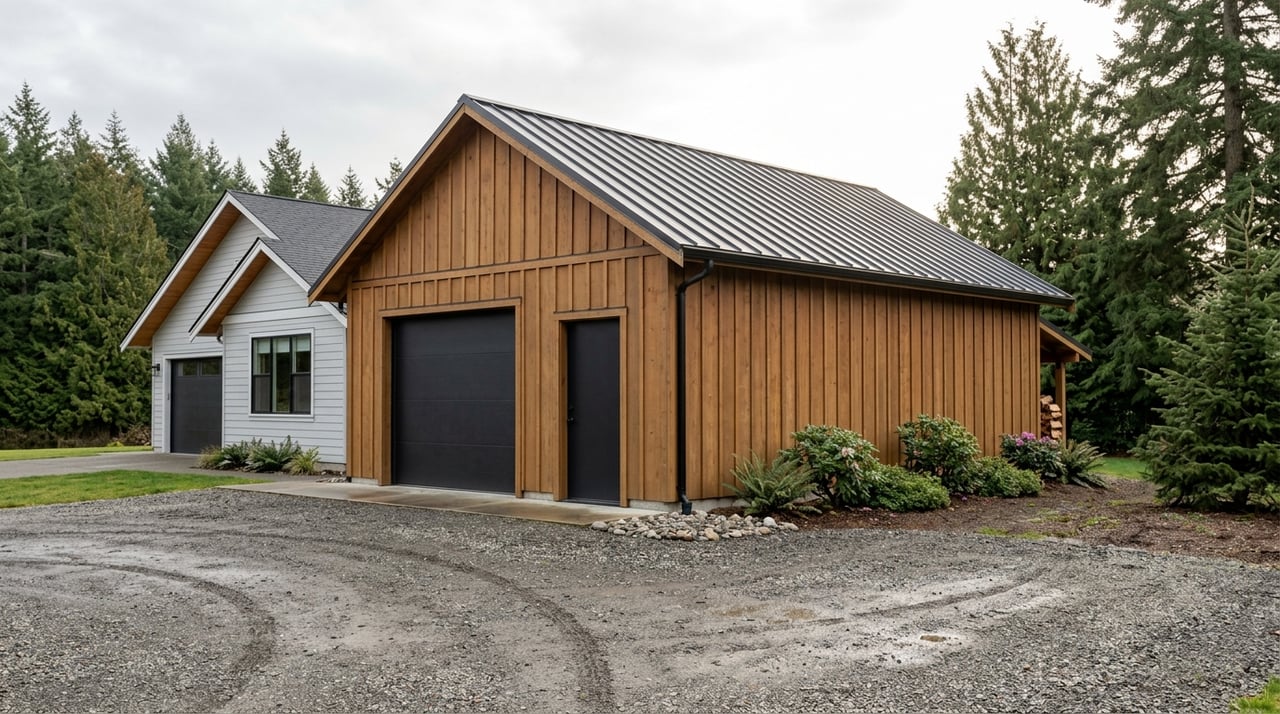
If you are picturing wide-open space, room for a shop, and a little more breathing room than a standard neighborhood lot, Brush Prairie acreage can be very appealing. It can also come with a different set of questions than you would ask in a typical subdivision. When you understand zoning, utilities, access, and day-to-day upkeep before you buy, you can make a much more confident decision. Let’s dive in.
Why Brush Prairie acreage feels different
Brush Prairie is one of Clark County’s rural centers. Clark County describes rural centers as areas with small-lot development and a defined edge, surrounded by rural landscape used for agriculture, forestry, larger-lot residential development, recreation, and environmental protection.
That setting can create a great mix of open land and nearby services, but it also means you should not assume every property works like a standard suburban homesite. In and around Brush Prairie, land uses can include residential, commercial, industrial, public facilities, parks, and open space, with service nodes such as post offices, veterinary clinics, day care, schools, small medical practices, and shopping services.
For you as a buyer, that means acreage shopping is often more about the parcel itself than the square footage of the home. The details of the lot can shape what you can build, how you maintain the property, and what your daily routine feels like after move-in.
Start with zoning and legal lot status
One of the most important first steps is confirming the property’s zoning and whether it is a legal lot of record. In unincorporated Clark County, Title 40 contains development regulations, and the county explains that zoning is the more specific designation that controls allowed uses, setbacks, lot sizes, and other standards.
That matters because two parcels can look similar online and still have very different rules. A parcel’s zoning can affect whether you can add outbuildings, how close structures can sit to property lines, and what kinds of uses are allowed on the site.
Just as important, a tax parcel is not always the same thing as a legal lot. Clark County defines a legal lot as a parcel that met the zoning and platting laws in place when it was created, and the county notes that some parcels remain legal lots even if they are smaller than today’s zoning standards.
If you are considering bare land or a property with future plans, this step is especially important. Clark County recommends asking about parcel status, sales history, and prior permits, and many buyers benefit from a purchase contingency tied to a formal legal lot determination or building permit review.
Questions to ask early
- What is the current zoning designation?
- Is the parcel confirmed as a legal lot of record?
- Are there prior permits or county records that affect future plans?
- What setbacks, lot-size standards, and use rules apply?
Know what you can build and add
Acreage buyers often picture more than just the main house. You may be thinking about a shop, barn, equipment storage, hobby space, or other accessory structures. In Brush Prairie, those plans should always be checked against county rules before you assume they are possible.
Clark County says exempt agricultural buildings can include structures used for farm or forestry implements, hay, grain, livestock, poultry, and horticultural products. Even so, those buildings still must meet local zoning rules, and the county notes that setbacks, height limits, and vehicle access requirements may still apply.
You also may still need permits for systems inside or connected to those buildings. Clark County notes that electrical, plumbing, and mechanical permits may still be required, even when a structure falls into an exempt agricultural category.
This is one reason acreage buyers should think beyond the listing description. A seller may mention a shop or open land, but your plans for future use should be verified with the parcel’s actual zoning and development standards.
Check wetlands, habitat, and building constraints
Open land can be beautiful, but not every part of a parcel is always buildable in the same way. Wetlands, habitat areas, and related buffers can affect where you place a home, shop, shed, driveway, or other improvements.
Clark County says its wetland and habitat ordinances are designed to protect fish and wildlife habitat while still allowing reasonable use of private property. The county also notes that single-family homes and normal accessory structures can still be built on existing legal lots even when habitat or wetland areas exist, though mitigation or added conditions may be required.
For you, that means the usable portion of a property may be different from the total acreage shown in a listing. If a parcel has environmental constraints, the placement of future improvements may take more planning than you expect.
What to verify on constrained land
- Whether wetlands, stream buffers, or habitat areas are mapped on the parcel
- Whether the current home and existing structures were properly permitted
- Whether future plans could require mitigation or added review
- How constraints affect building area, access, and placement
Verify water, sewer, wells, and septic
Utilities on acreage properties should always be verified parcel by parcel. In Brush Prairie, some properties may connect to public systems, while others rely on private wells, septic systems, or a combination of both.
Clark County Public Health reviews new wells and water systems and provides maintenance resources. The county’s drinking-water program also reviews plans for new systems and wells, which is why buyers should confirm exactly how a property is served instead of relying on assumptions.
If a home uses septic, ask for records early. Clark County says a current Report of System Status should be on file before a home is listed for sale, and that report is considered current only if it was completed within one year of the date of sale.
You should also ask for septic permits, as-builts, and prior inspection reports. Those records can help you understand the system layout, past maintenance, and whether any questions need to be addressed during your inspection period.
Private wells deserve the same attention. Clark County says regular testing for coliform bacteria is a core part of well operation and maintenance, so it is smart to ask where the well is located, whether recent testing is available, and whether any records are missing.
For parcels near the urban edge, sewer service can be more complicated. Clark County’s sewer-waiver rules explain that new structures in urban growth areas generally must connect to public sewer, though waivers may be available in certain cases when on-site sewage can be approved and sewer extension is impractical.
Think through commute and road access
Acreage living often comes with a tradeoff many buyers are happy to make: more land in exchange for a less subdivision-style setting. Still, daily access matters, especially if your route depends on State Route 503.
WSDOT treats Brush Prairie as part of the SR 503 corridor between Vancouver and Battle Ground. The agency says the corridor serves local commuters, freight, and regional recreational traffic, with daily traffic volumes reported between 19,000 and 32,000 vehicles in 2019, and it expects peak-time delays to grow as development continues.
That is why commute-testing matters. If you are serious about a property, try the drive at the actual times you would leave for work, school drop-offs, appointments, or evening errands.
Road frontage is also worth a close look. Clark County says brush, weeds, and tree limbs can block sightlines to traffic control devices, vehicles, pedestrians, wildlife, and livestock, and that roadside vegetation affects drainage and winter road maintenance too.
Be realistic about acreage maintenance
The extra space that draws you to acreage can also mean more regular upkeep. Larger lots often require more attention than a neighborhood home on a smaller homesite.
Drainage is one of the big items to inspect. Clark County says stormwater runoff is the number one way pollution enters local waterways, and its stormwater program is designed to slow runoff, remove pollutants, and protect streams, rivers, lakes, and groundwater.
On a property tour, pay attention to ditches, low spots, grading, erosion, runoff paths, and any signs that water collects near the house, driveway, shop, or pasture areas. These issues do not always show up clearly in listing photos.
Weed control is another practical ownership cost. Clark County says noxious weeds are the landowner’s responsibility, and it notes that these weeds can increase erosion, fire risk, and habitat loss.
If you are buying acreage, ask what weed control has been done and whether there is a history of blackberry, broom, thistle, or other invasive species. A property can look manageable in one season and demand much more work in another.
Acreage upkeep checklist
- Inspect drainage, ditches, and runoff patterns
- Look for erosion or standing water concerns
- Ask about weed-control history and seasonal maintenance
- Check frontage condition and roadside visibility
- Budget time and money for mowing, trimming, and upkeep
A smart way to tour Brush Prairie acreage
When you tour acreage, it helps to shift your mindset a little. You are not just evaluating the home’s layout and finishes. You are also evaluating the land, the infrastructure, and the long-term fit for how you want to live.
A strong acreage showing should answer practical questions about zoning, legal lot status, utilities, access, and maintenance. The more clearly you understand those details upfront, the easier it is to avoid surprises later in escrow.
That local detail work is where experienced guidance can make a real difference. If you want help sorting through Brush Prairie acreage options, comparing property tradeoffs, or knowing which questions to ask before you write an offer, Karen Higgins can help you move forward with clear, local insight.
FAQs
What should buyers verify first on a Brush Prairie acreage property?
- Start with zoning, legal lot status, utility type, and any wetland or habitat constraints that could affect how you use the property.
What does legal lot status mean for Brush Prairie acreage buyers?
- In Clark County, a legal lot is a parcel that met zoning and platting laws when it was created, and confirming that status helps you understand whether the parcel can support your plans.
What utility questions matter most for Brush Prairie acreage homes?
- Ask whether the property has public water and sewer or relies on a private well and septic system, and request records such as septic reports, as-builts, permits, and recent well testing.
What can affect where you build on Brush Prairie acreage?
- Wetlands, habitat areas, stream buffers, setbacks, zoning rules, and access requirements can all affect where a house, shop, barn, or shed may be placed.
Why should Brush Prairie acreage buyers test the commute?
- WSDOT says SR 503 carries commuter, freight, and recreational traffic and expects growing peak-time delays, so driving the route at your real travel times can give you a better sense of daily life.
What maintenance issues come with owning acreage in Brush Prairie?
- Common concerns include drainage, stormwater runoff, mowing, ditch upkeep, roadside vegetation, and controlling noxious weeds such as blackberry, broom, or thistle.